When you hear the words “being active”, “exercise”, or “fitness”, what comes to mind?
Maybe it’s spending an hour in the gym, running a 5k, lifting heavy weights or taking part in a group class. These are all great ways to move, but they’re not the only ways.
Being active looks different for everyone. It could be a swim before work, a walk with a friend, dancing around the kitchen with your children, cycling to the shops or taking the stairs instead of the lift.
The important thing isn’t doing one specific type of exercise. It’s finding ways to move more often, in ways that work for you, because every move counts.
How much movement do we really need?
Current guidance recommends that adults aim for 150 minutes of moderate activity each week (or 75 minutes of vigorous activity), and strengthening activities on at least two days each week.
If that sounds like a lot, don’t worry. You don’t have to do it all in one go.
Breaking movement into smaller chunks throughout the week can make it feel much more achievable, and those everyday moments of activity all add up.
What counts as moderate activity?
Moderate activity means you’re moving enough to raise your heart rate and breathe a little harder, but you can still have a conversation.
Examples include:
- Brisk walking
- Swimming
- Cycling
- Dancing
- Gardening
- Active play with children
- Group exercise classes
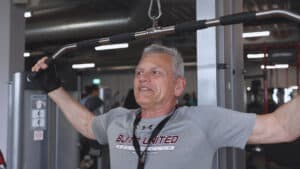
- A steady gym workout
It doesn’t have to leave you exhausted. It’s about moving your body in a way that feels good and supports your health.
Vigorous activity is exercise that makes your heart beat faster and leaves you breathing much harder. You’ll find it difficult to hold a conversation while you’re doing it, but you should still feel in control and able to continue safely.
Examples include:
- Running or jogging
- Fast cycling or cycling uphill
- HIIT (High-intensity interval training)
- Competitive sports such as football, squash or basketball
Because vigorous activity is more intense, you only need 75 minutes per week to achieve the same health benefits as 150 minutes of moderate activity.
And you don’t have to choose one or the other. Many people naturally combine moderate and vigorous activity throughout the week. The most important thing is finding activities you enjoy and can stick with.
What could 150 minutes look like?
You don’t have to schedule in a workout or gym visit every day to achieve this.
For one person, it might be a 30-minuite walk, five days a week. Someone else might walk twice, swim once and run once.
It looks different for everyone, so the important thing is not to compare your routine with someone else’s. Do what works for you.
It’s also worth remembering that everyday movement also counts. When you’re making the choice to walk instead of drive short distances, take the stairs, or get up during breaks at work, you’re also contributing towards your move goal.
The role of strengthening activities
Alongside getting your heart and lungs working, strengthening activities are an important part of staying active.
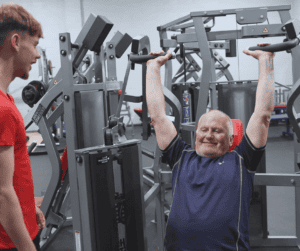
Strength exercises help you build and maintain muscle, support your bones and joints, and make everyday activities easier, especially as we age. From carrying the shopping and lifting children or grandchildren, to climbing the stairs or getting up from a chair, having good muscle strength helps you stay independent and confident in everyday life.
As we get older, we naturally begin to lose muscle mass and strength if we don’t use it. The good news is that regular strengthening activities can help slow this process, reducing the risk of falls, improving balance and posture, and supporting long-term health and mobility.
With the growing use of GLP-1 weight loss medications, such as those prescribed to help manage obesity and type 2 diabetes, strength training has become even more important. While these medications can be highly effective for supporting weight loss, some of the weight lost may include muscle as well as body fat. Including regular strengthening exercises and eating enough protein can help preserve muscle, support healthy movement and ensure you’re building a stronger, healthier body.
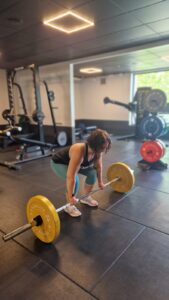
Strength doesn’t just mean lifting heavy weights. It can include banded resistance exercises, bodyweight exercises, or strength-focused classes. Any activity that challenges your muscles is doing the job, and it can be adapted to suit your current fitness level and experience.
Time to make your move
Being active isn’t about comparing yourself to someone else or trying to fit into a certain idea of ‘fitness’. It’s about finding your own reasons to move.
Maybe you want more energy to enjoy time with your family. Maybe you want to feel stronger, improve your confidence, meet new people or simply create a little more time for yourself.
Whatever your reason, there are so many ways to move, and the best place to start is with one small step.
Whether you’re walking, swimming, joining a class, getting back into the gym or trying something completely new, remember: Every move counts.